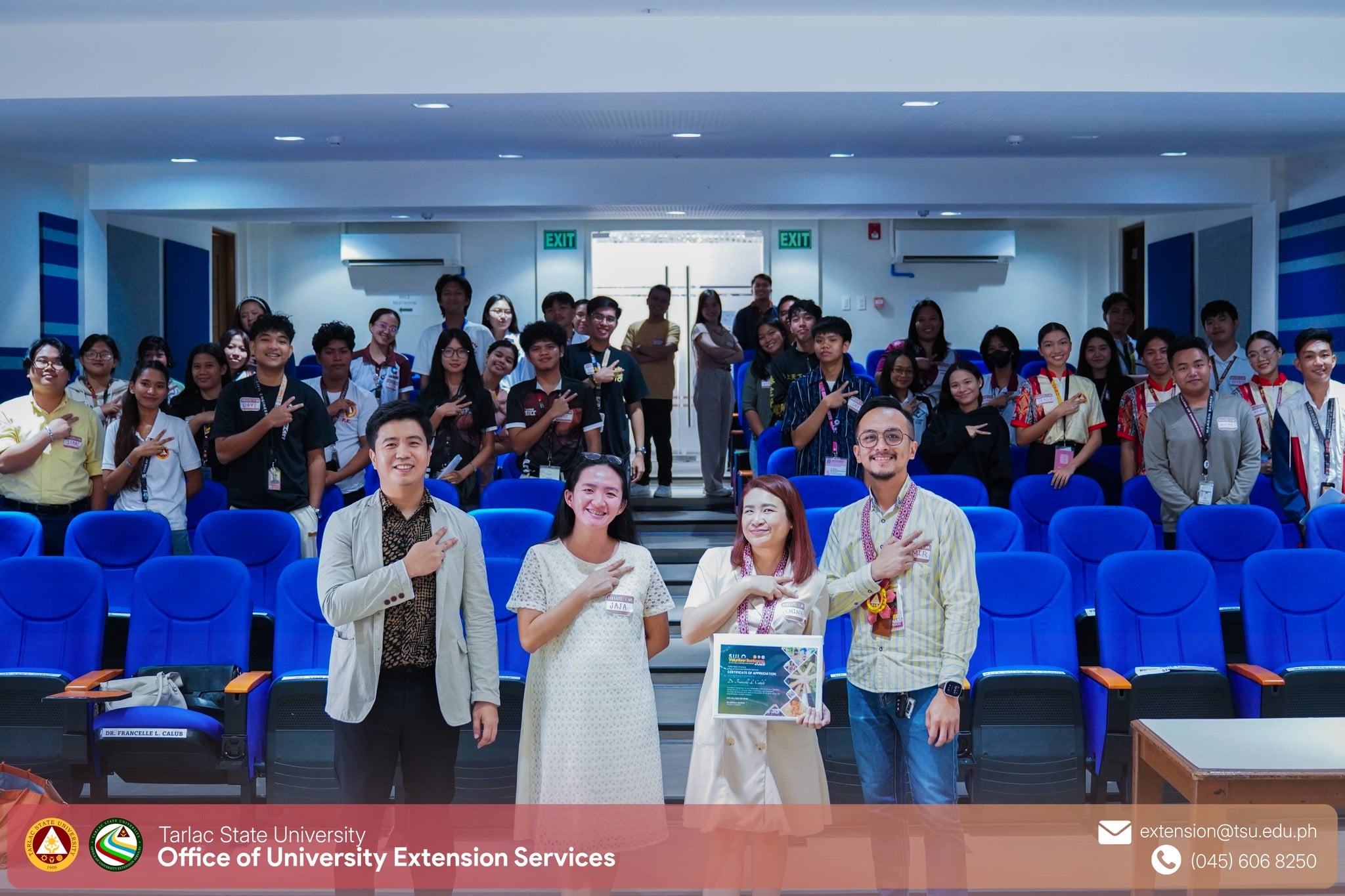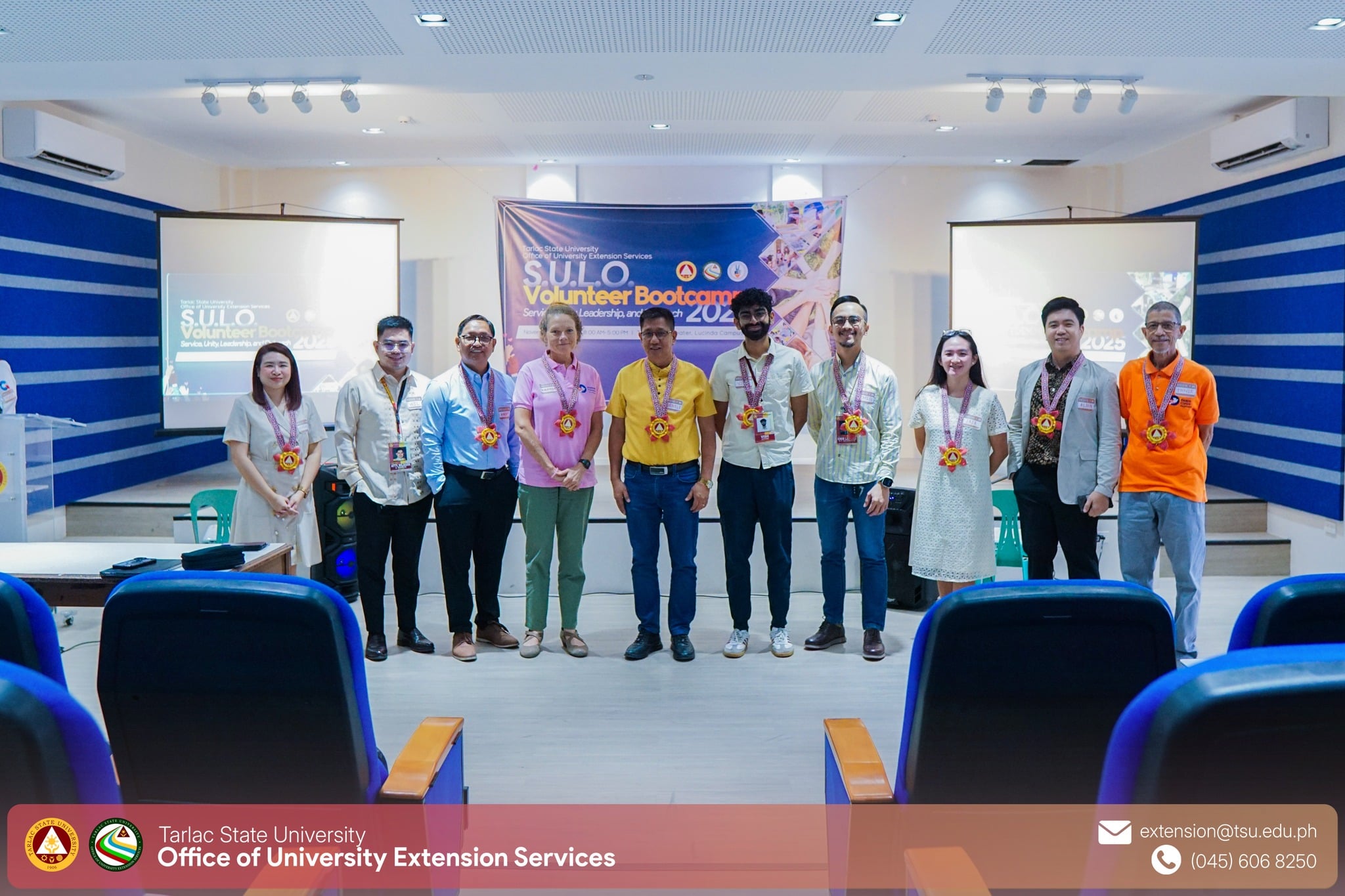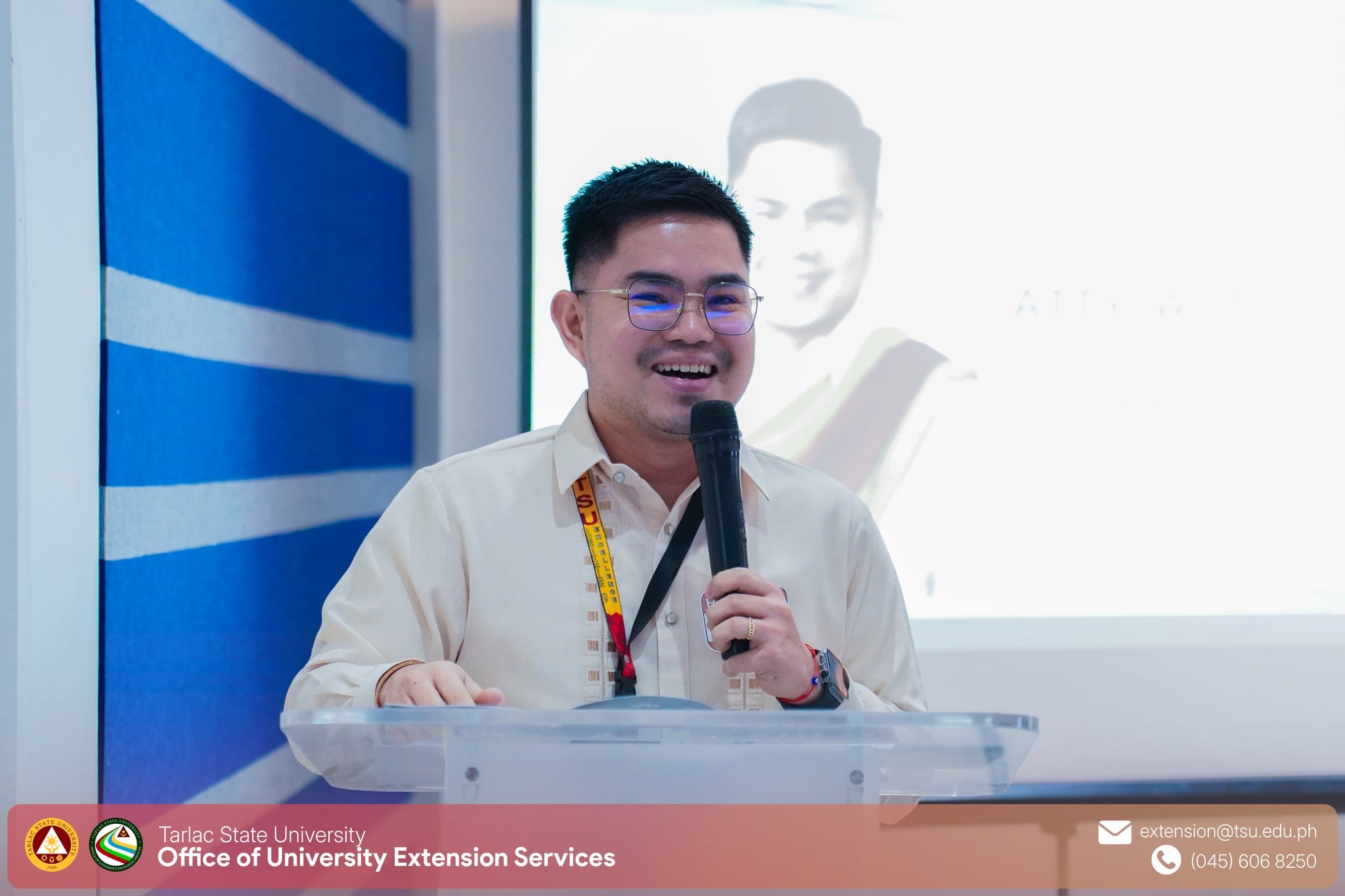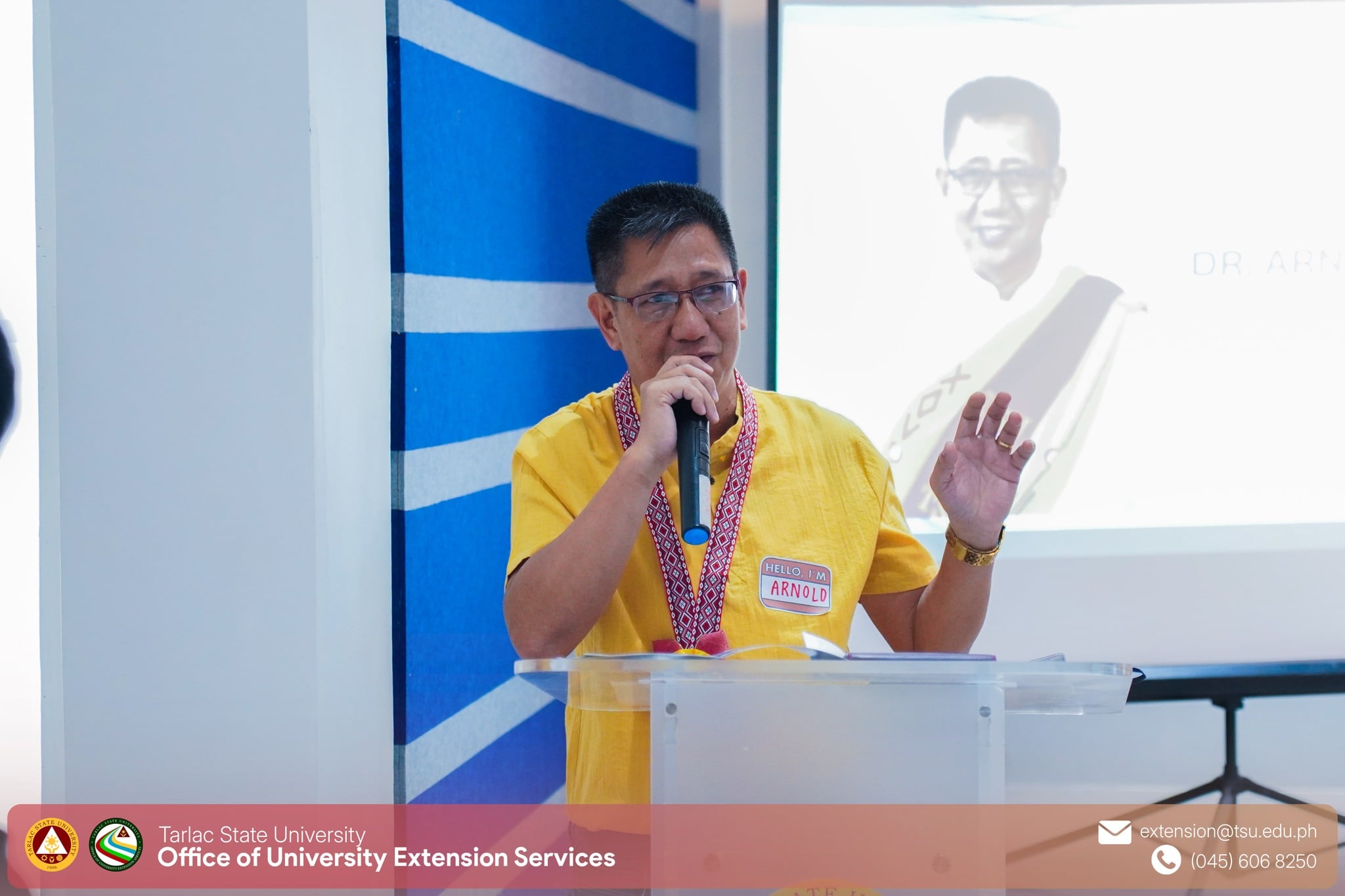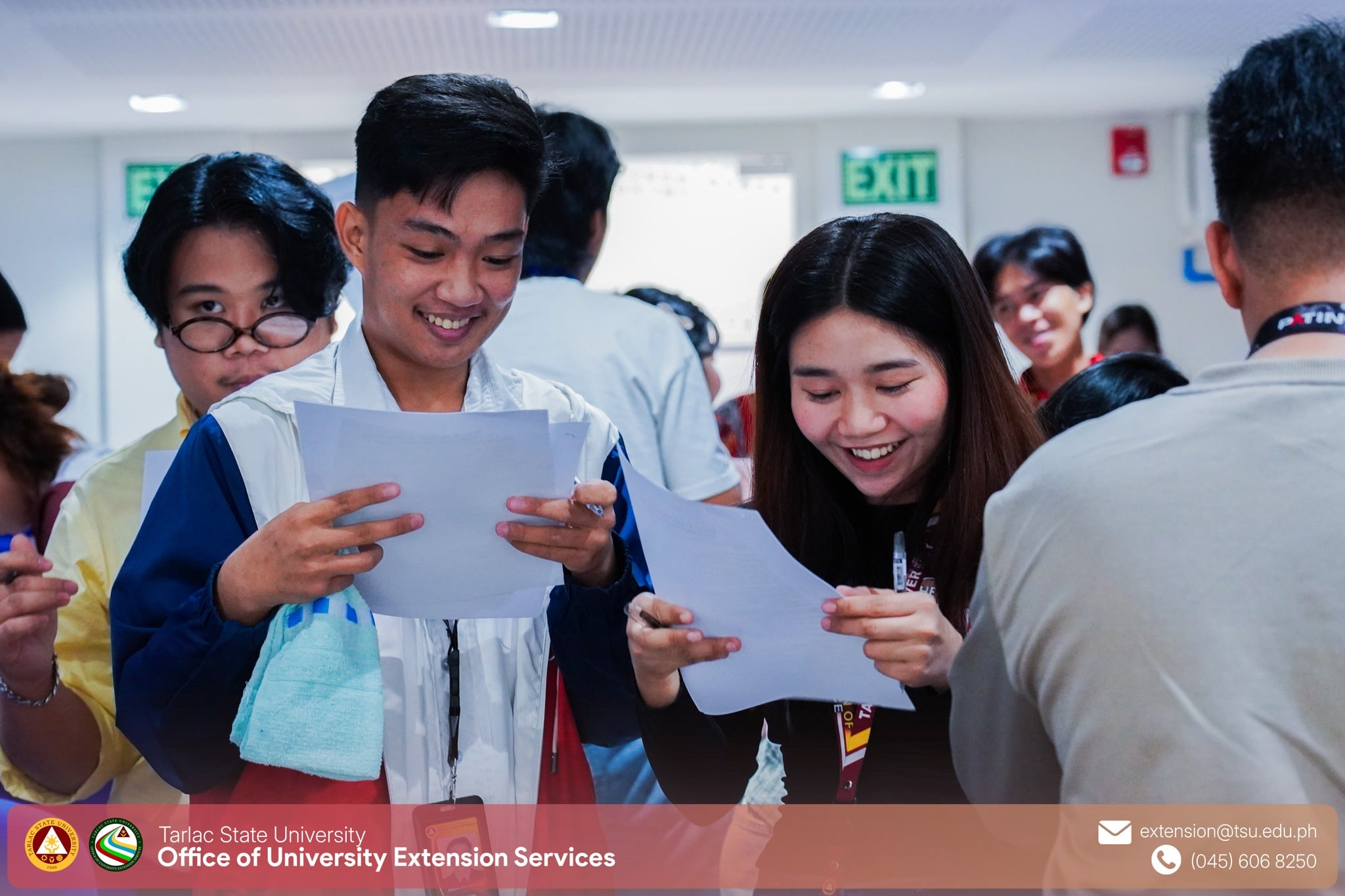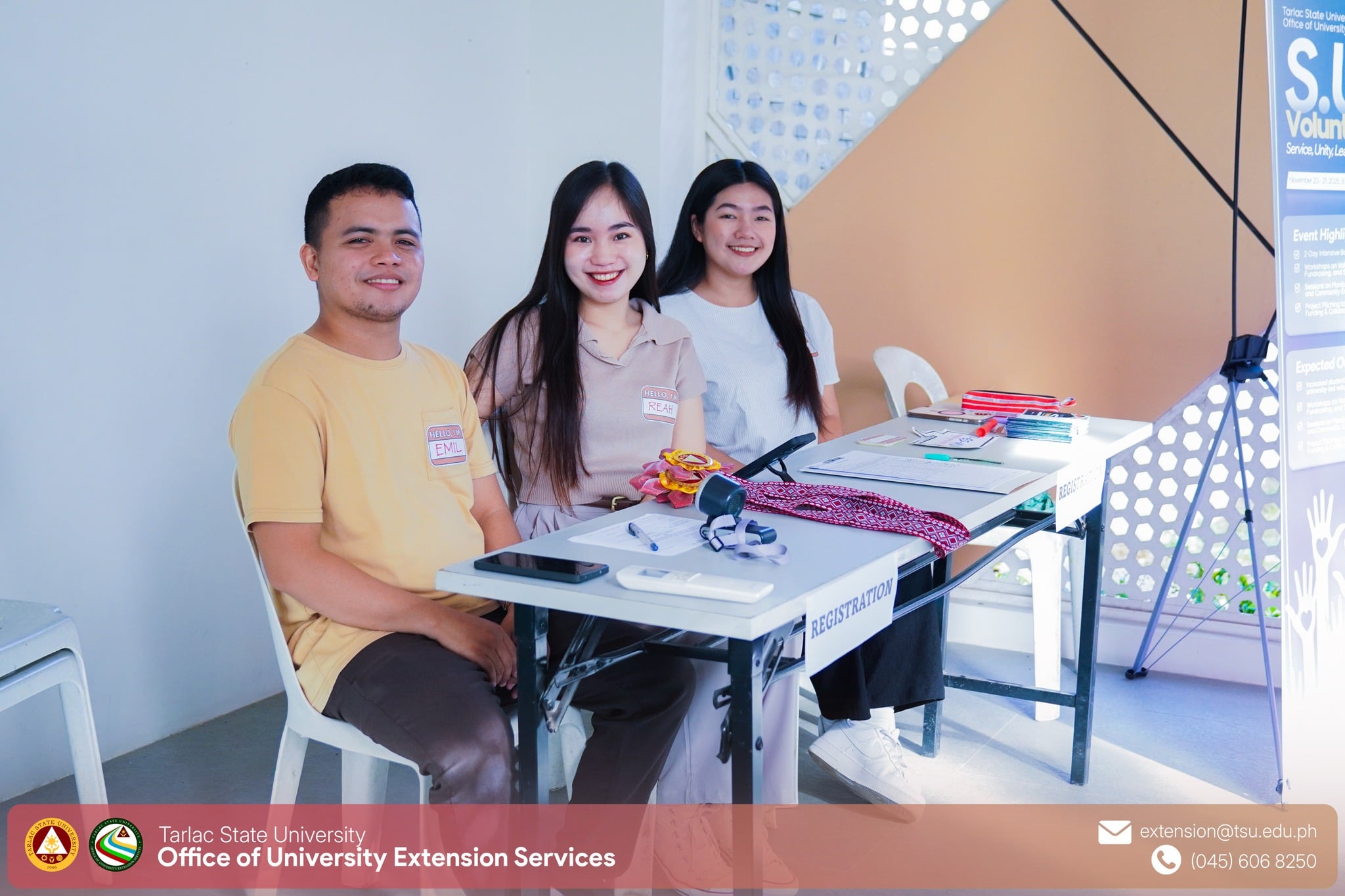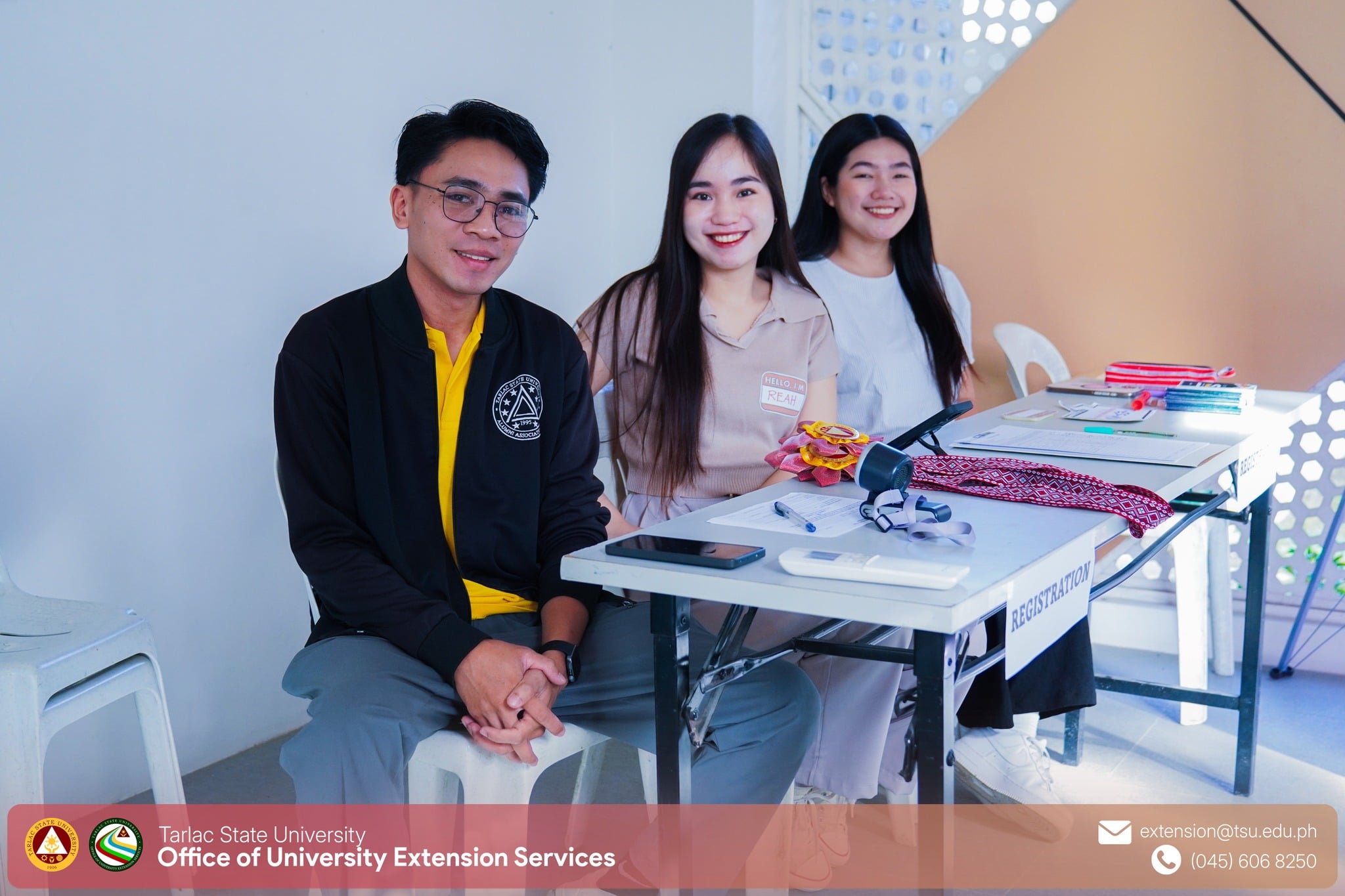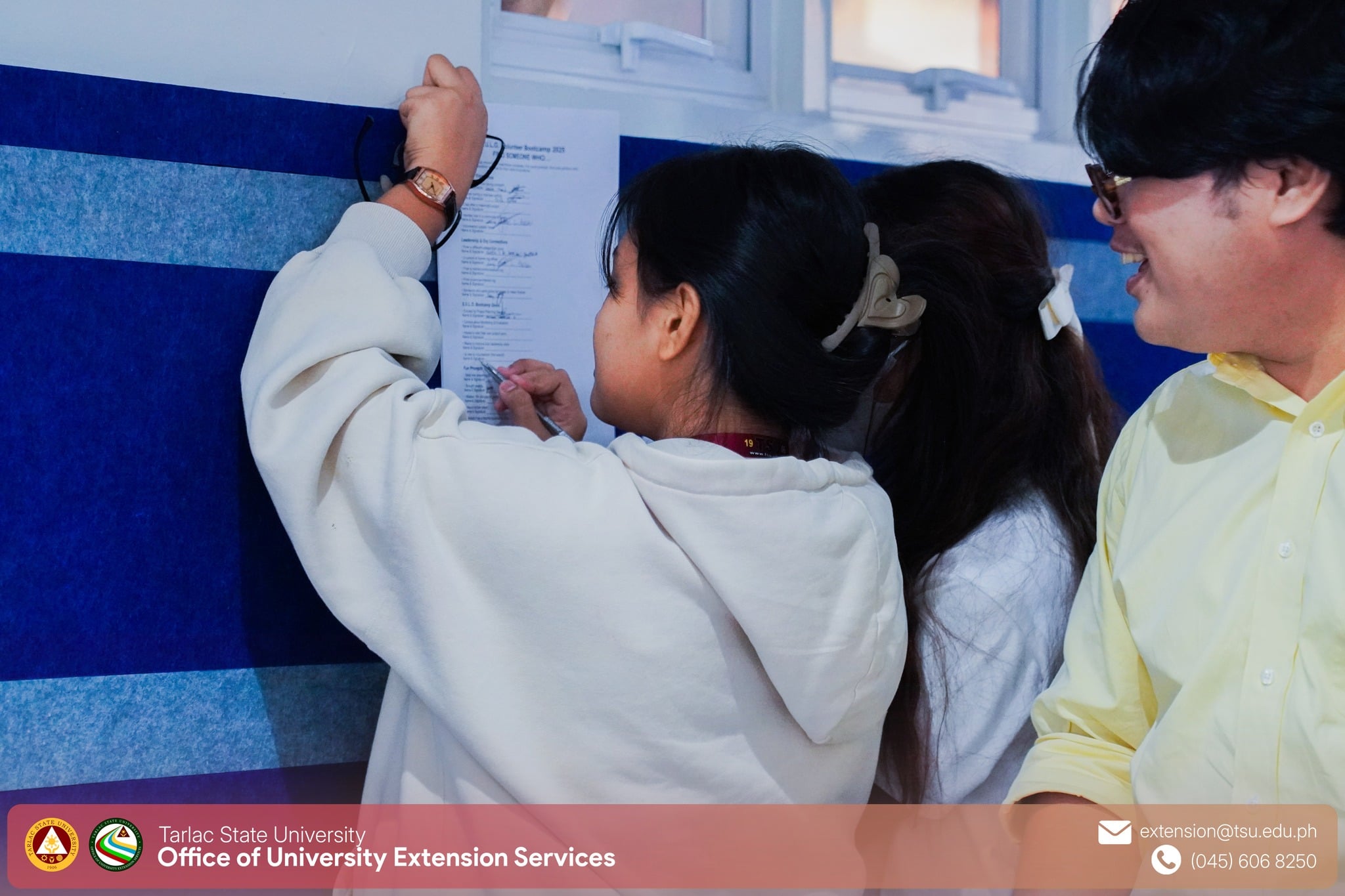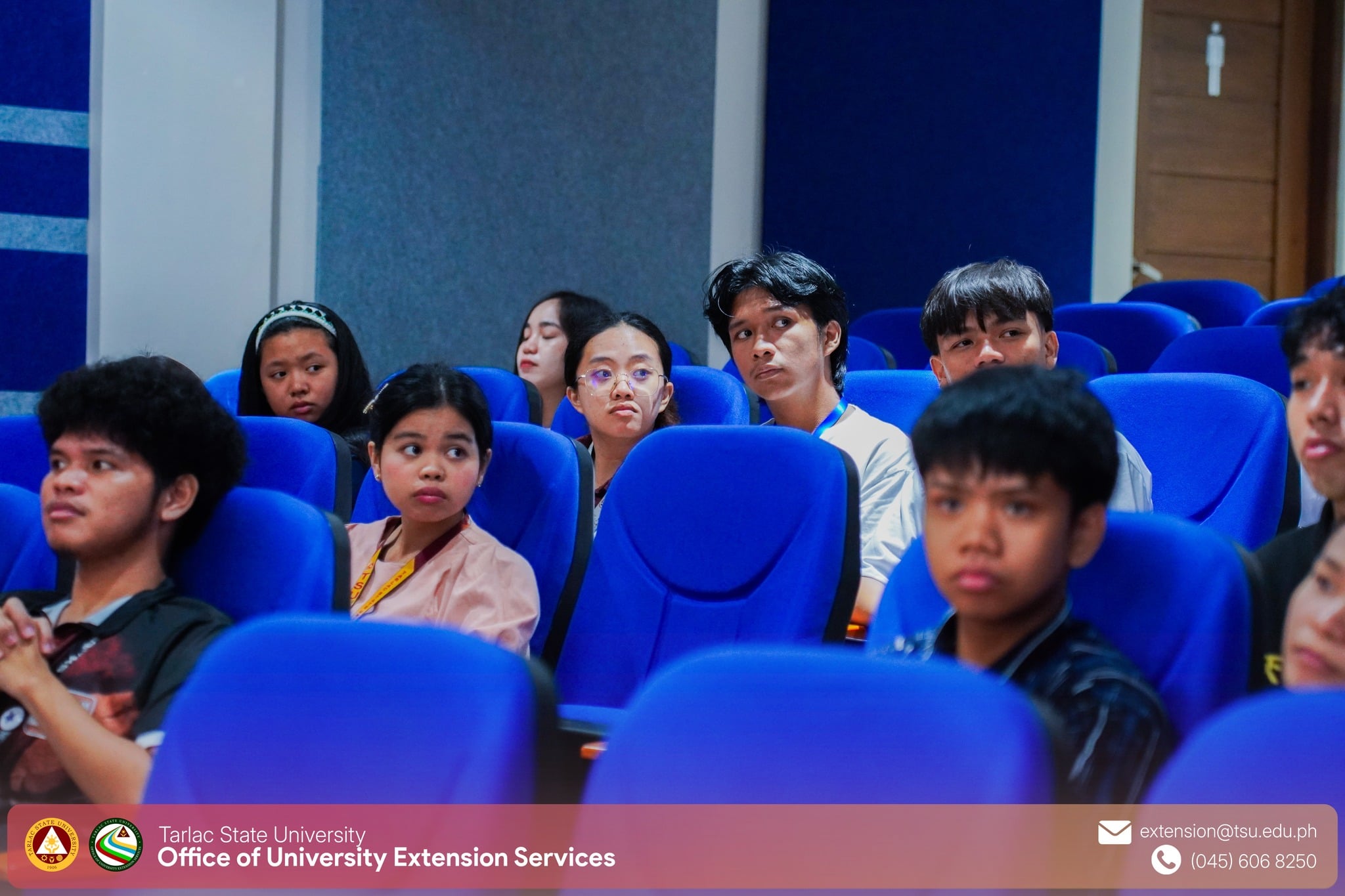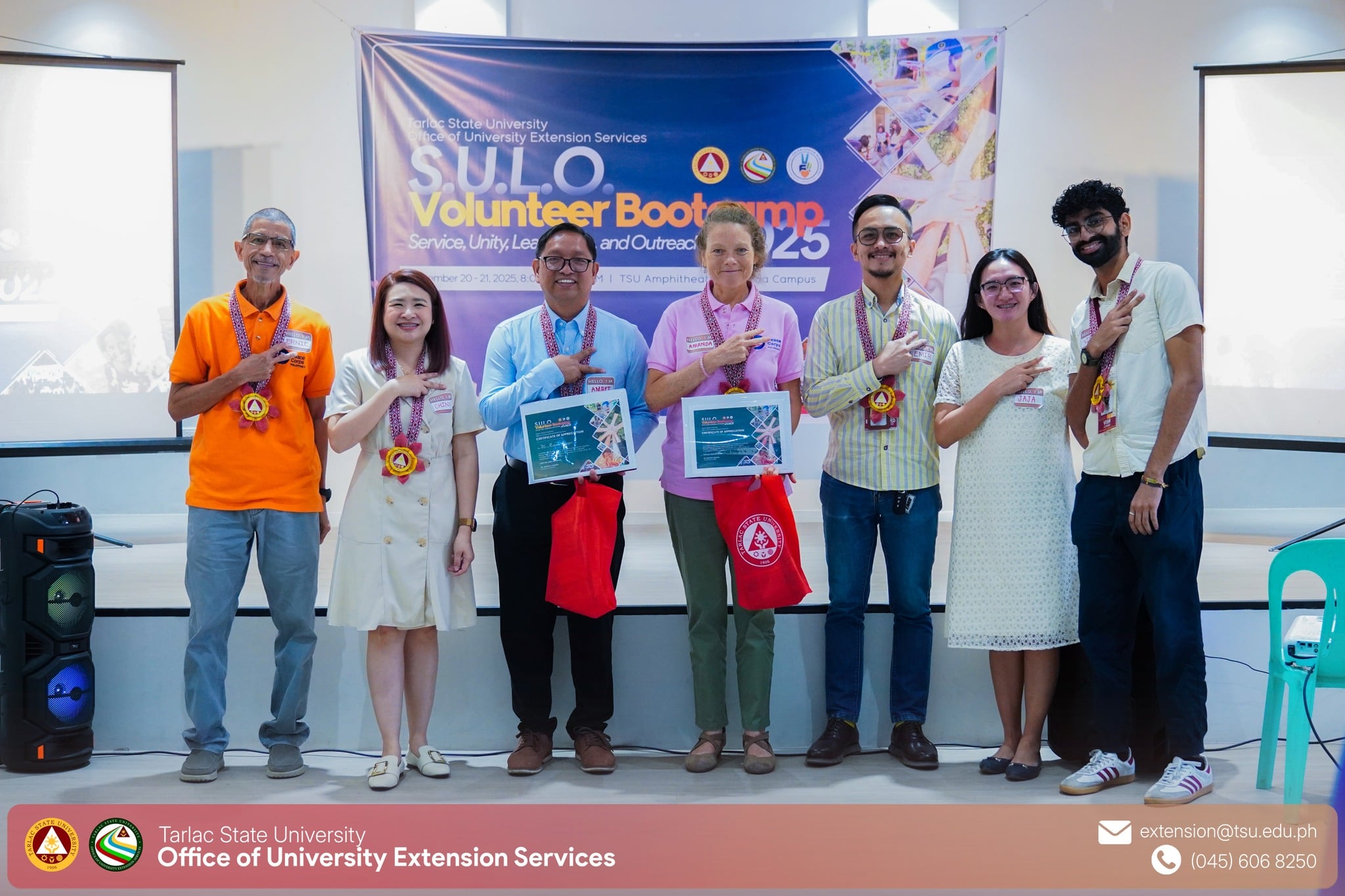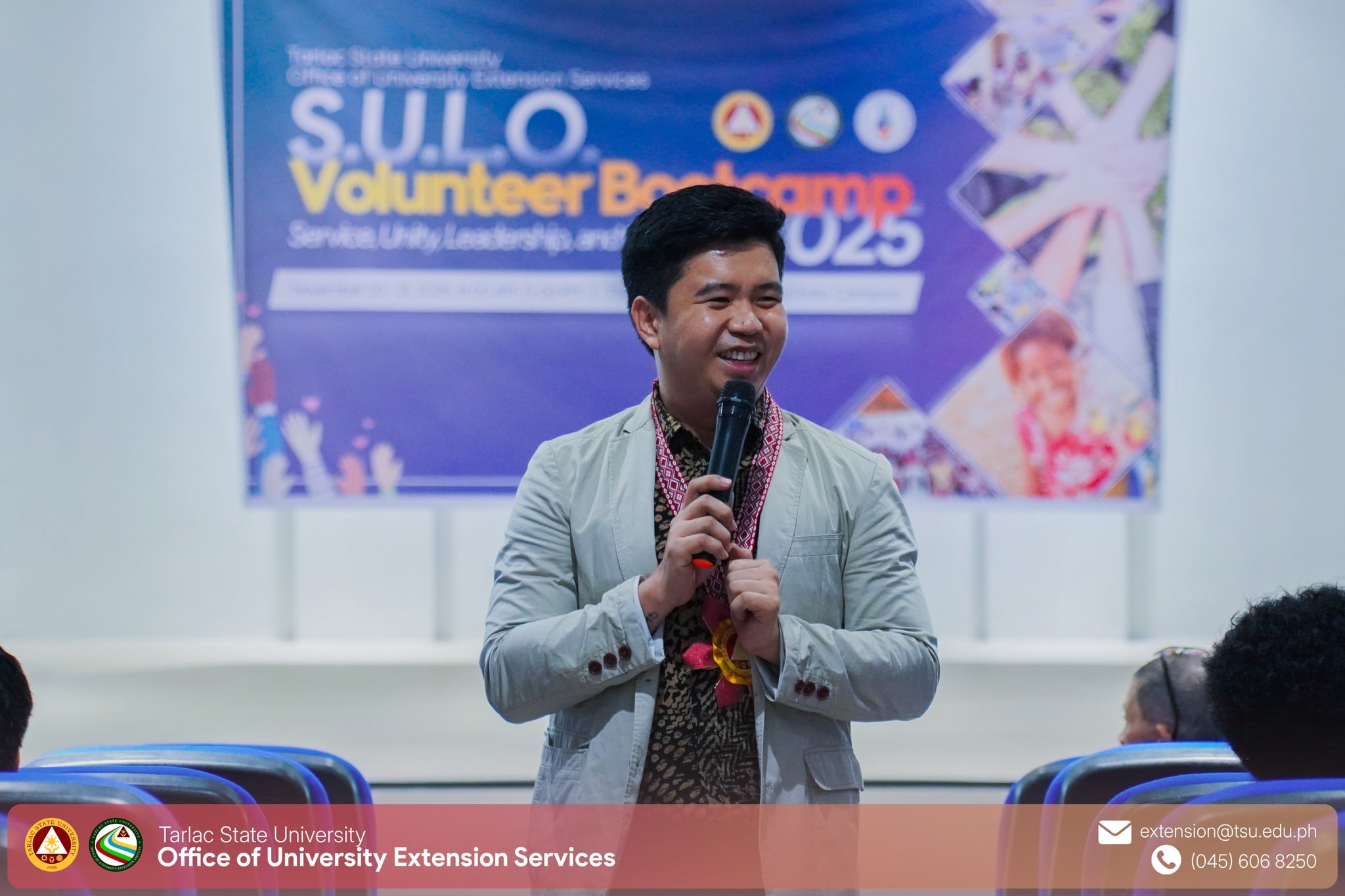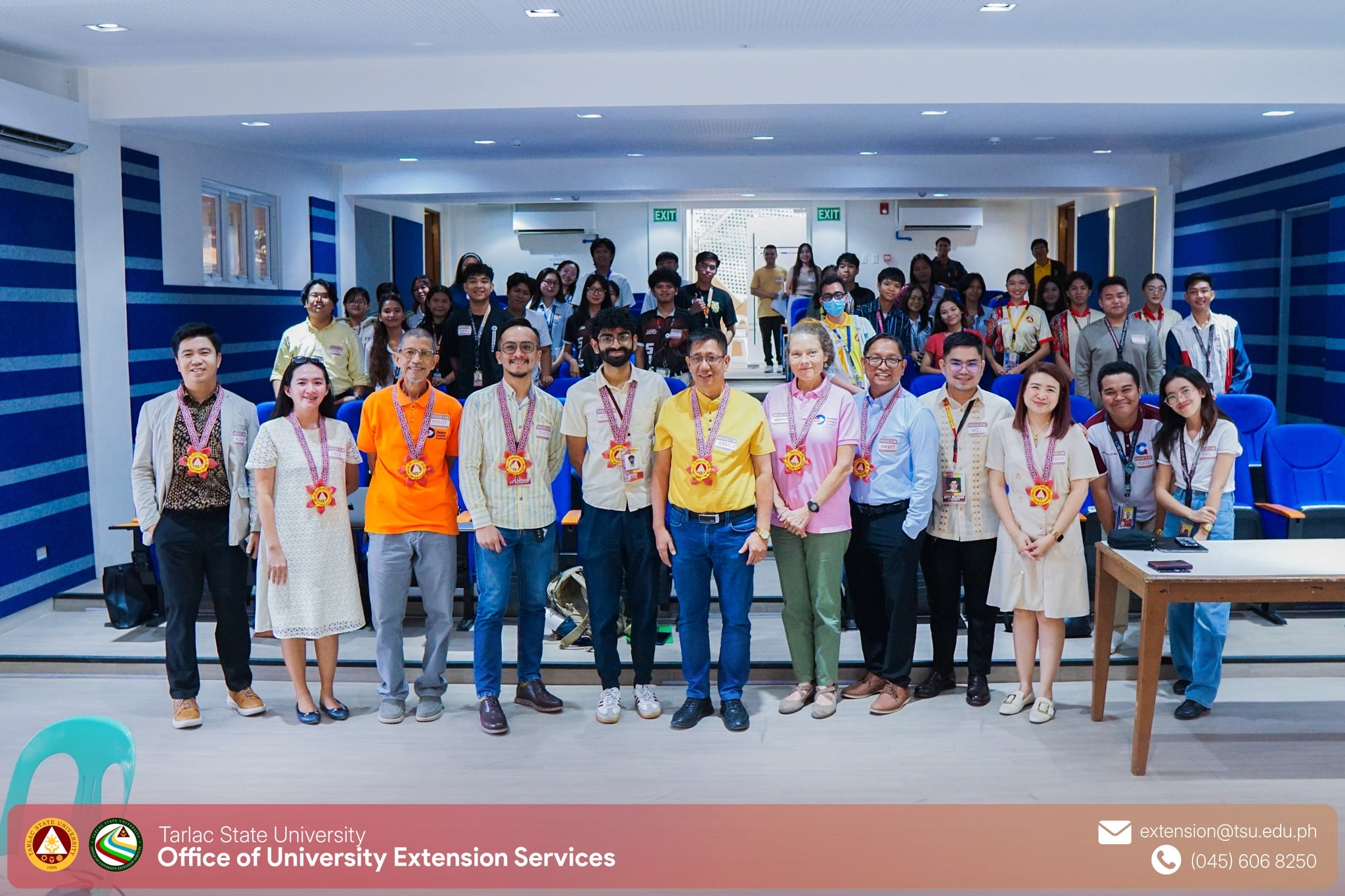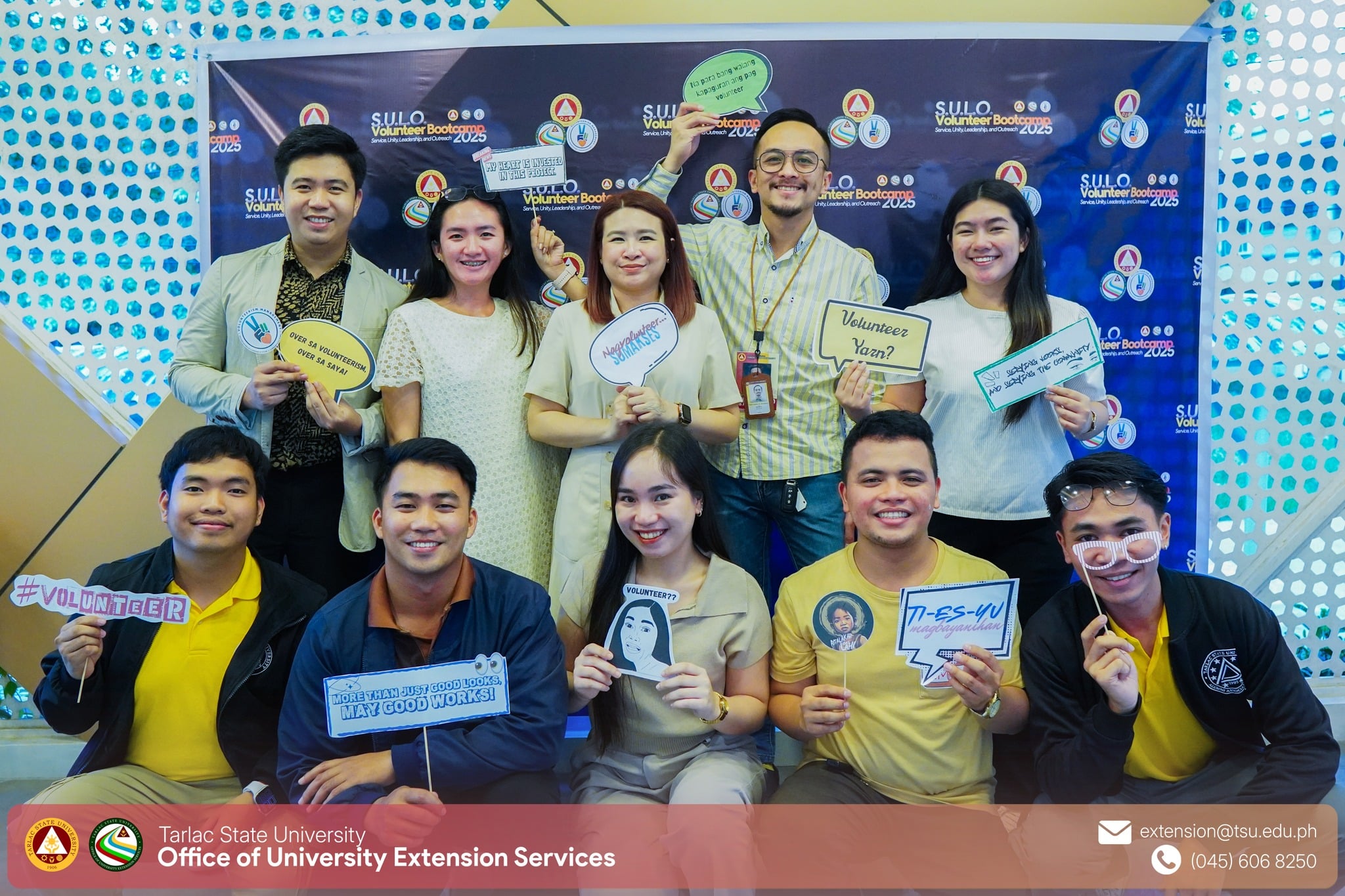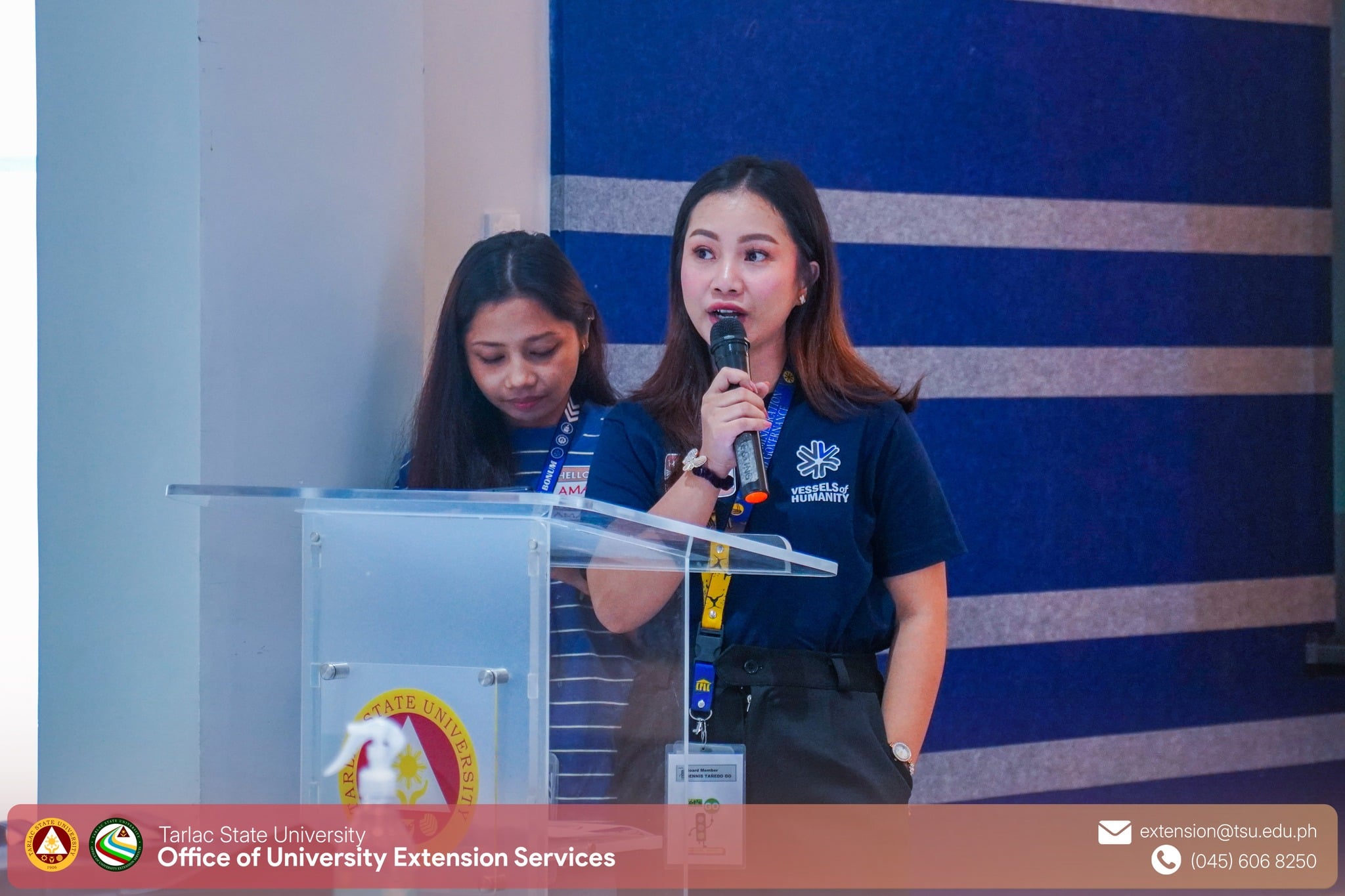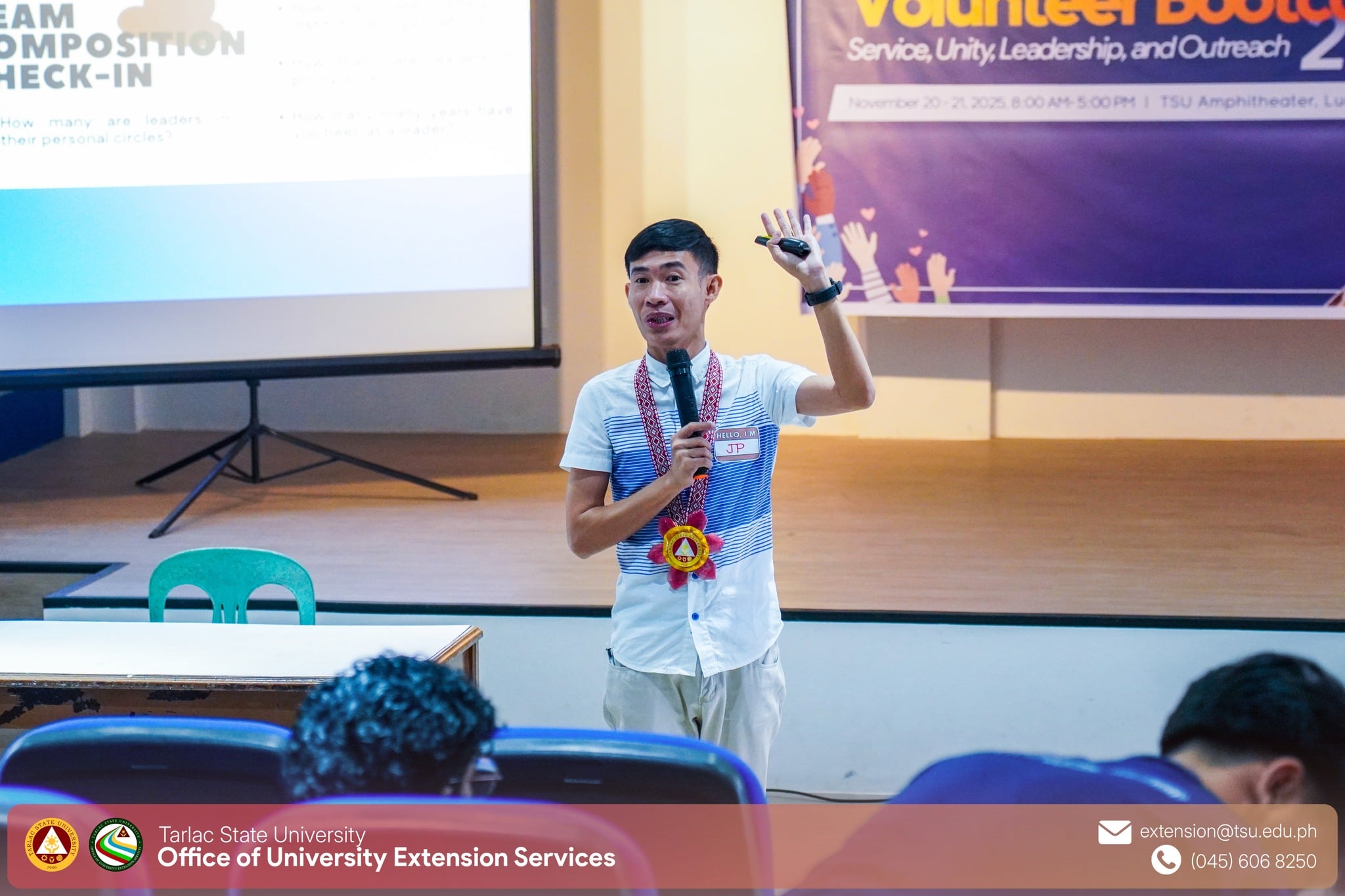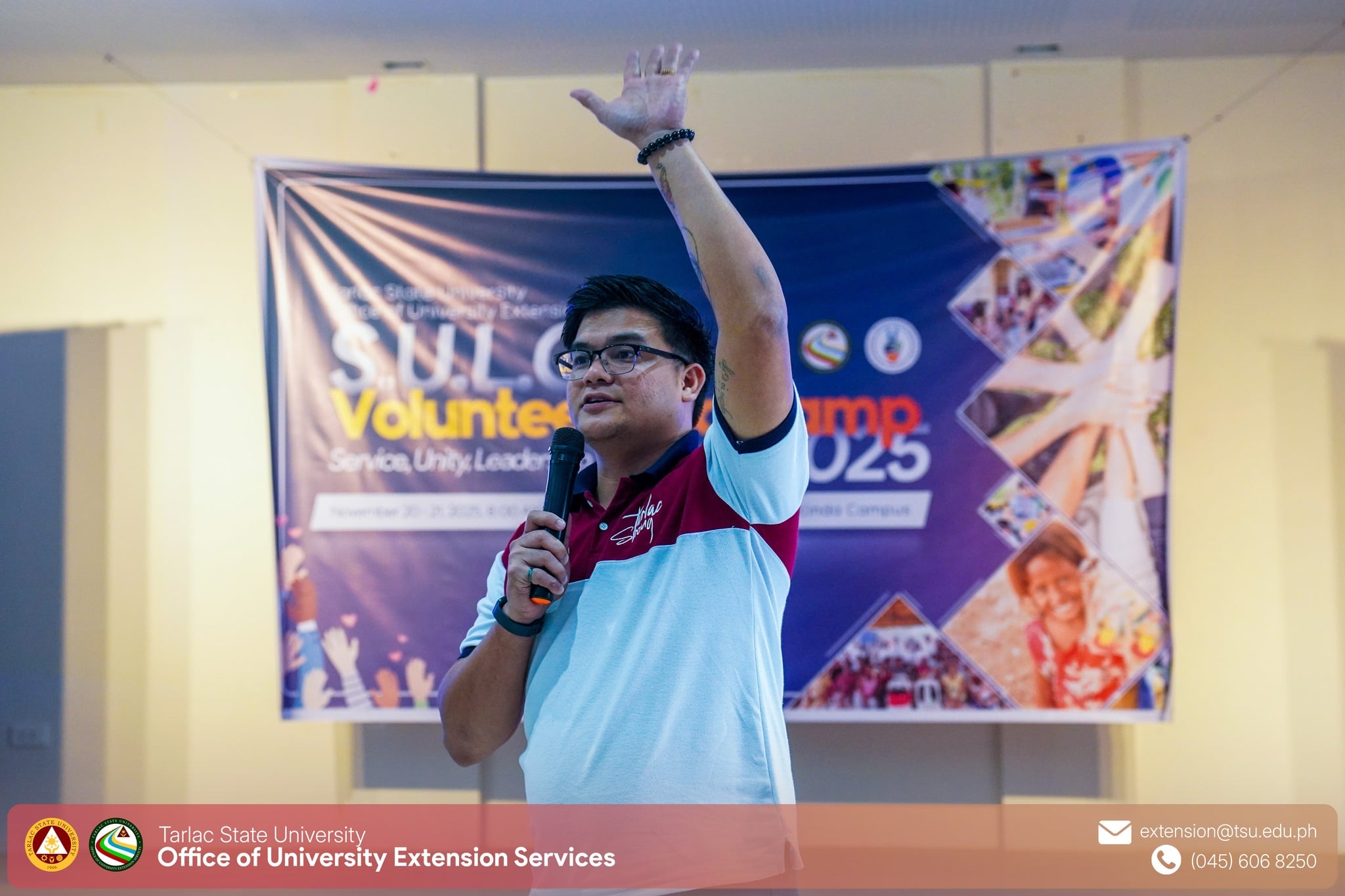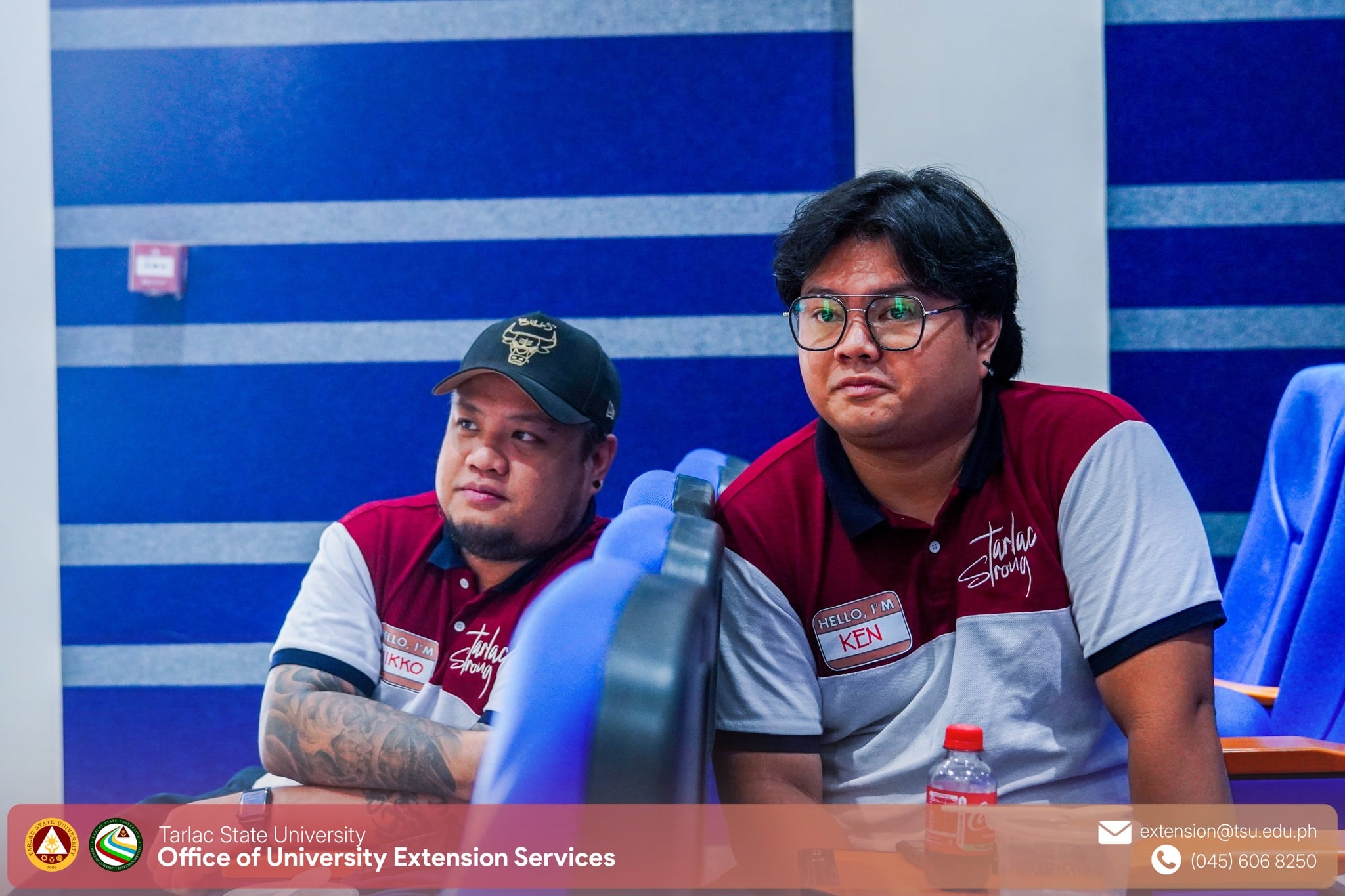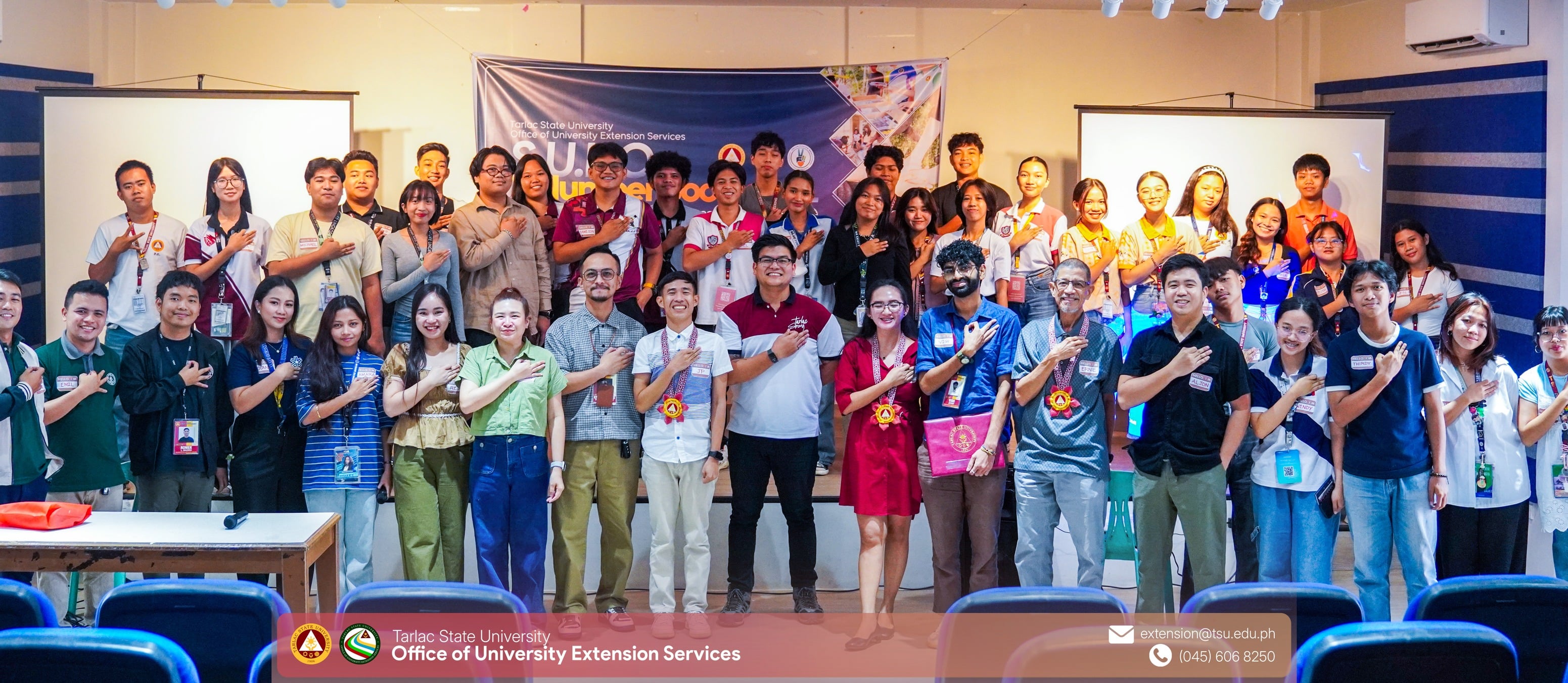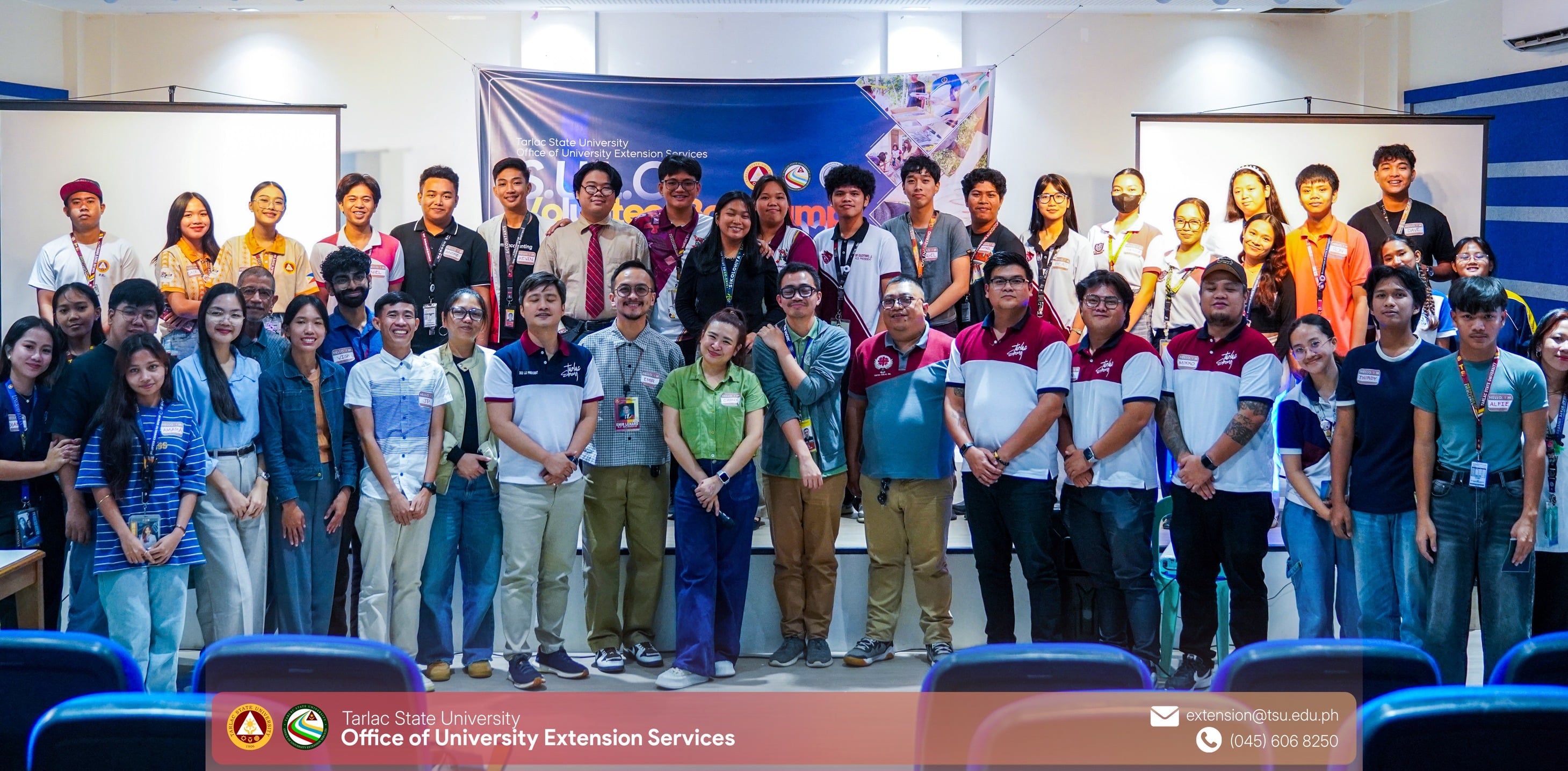
The SULO (Service, Unity, Leadership, and Outreach) Volunteer Bootcamp, spearheaded by the Office of University Extension Services (OUES) through its Volunteerism Management Department (VMD), successfully concluded on November 20–21 at the TSU University Amphitheater. Peace Corps volunteers, humanitarian partners, and student leaders from various campus organizations gathered for a two-day intensive program centered on ethical volunteerism, leadership development, and community-responsive project planning.
Day 1 opened with messages from University President Dr. Arnold E. Velasco and Vice President for Research, Innovation, and Extension
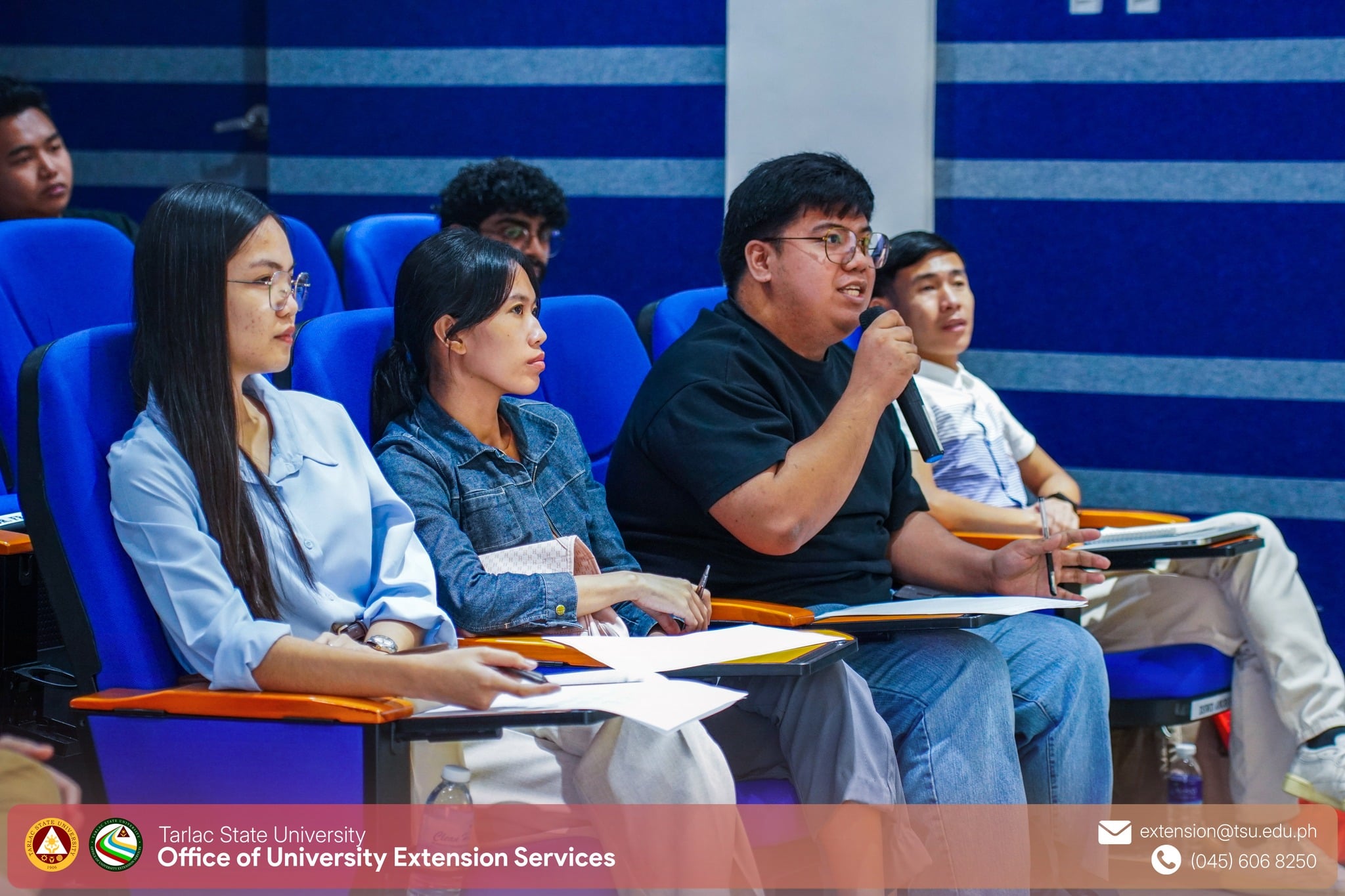
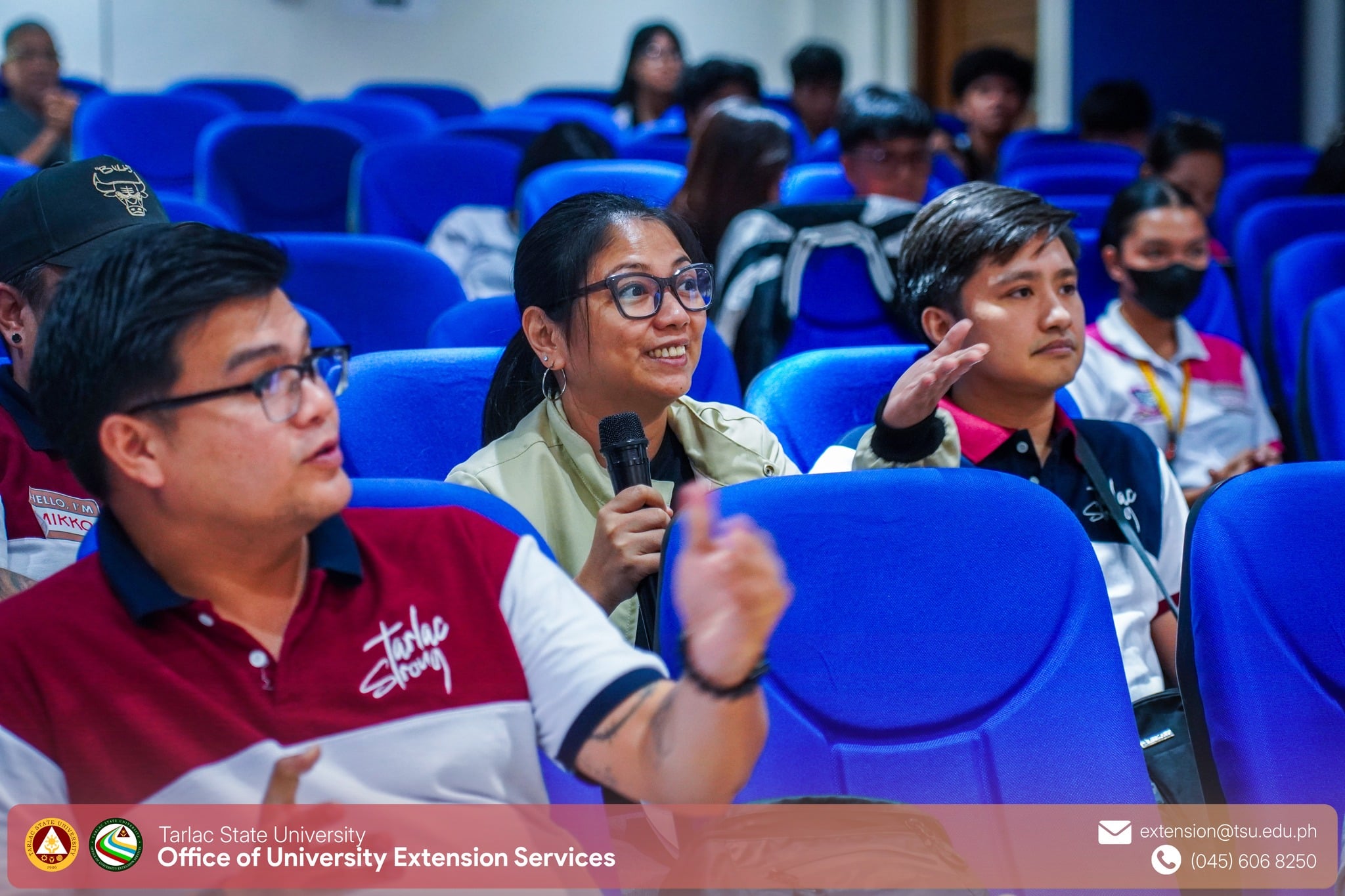
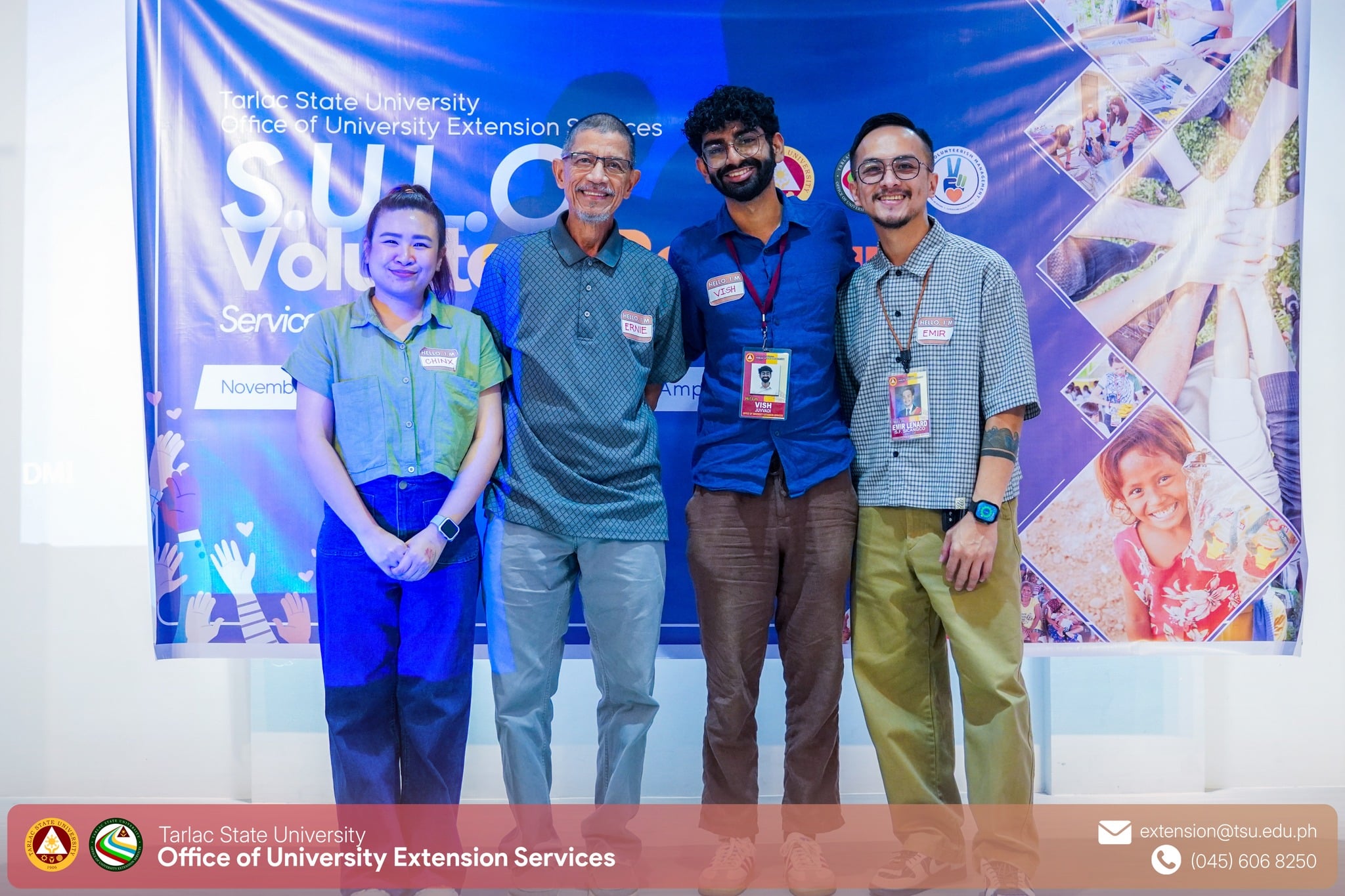
The Volunteerism 101 session was led by guest speakers Amanda Martin, former Director of Programming and Training of Peace Corps, and Roberto “Ambet” Yangco, Youth Program Manager of Peace Corps Philippines. Presented in a Q&A-style format, the discussion opened with a set of frequently asked questions prepared and facilitated by Vish Juvvadi and Ernie Arao, US Peace Corps Volunteers working with TSU. This was followed by an open-floor exchange, where students raised their own questions to clarify core concepts and explore the real-world challenges of volunteer work.
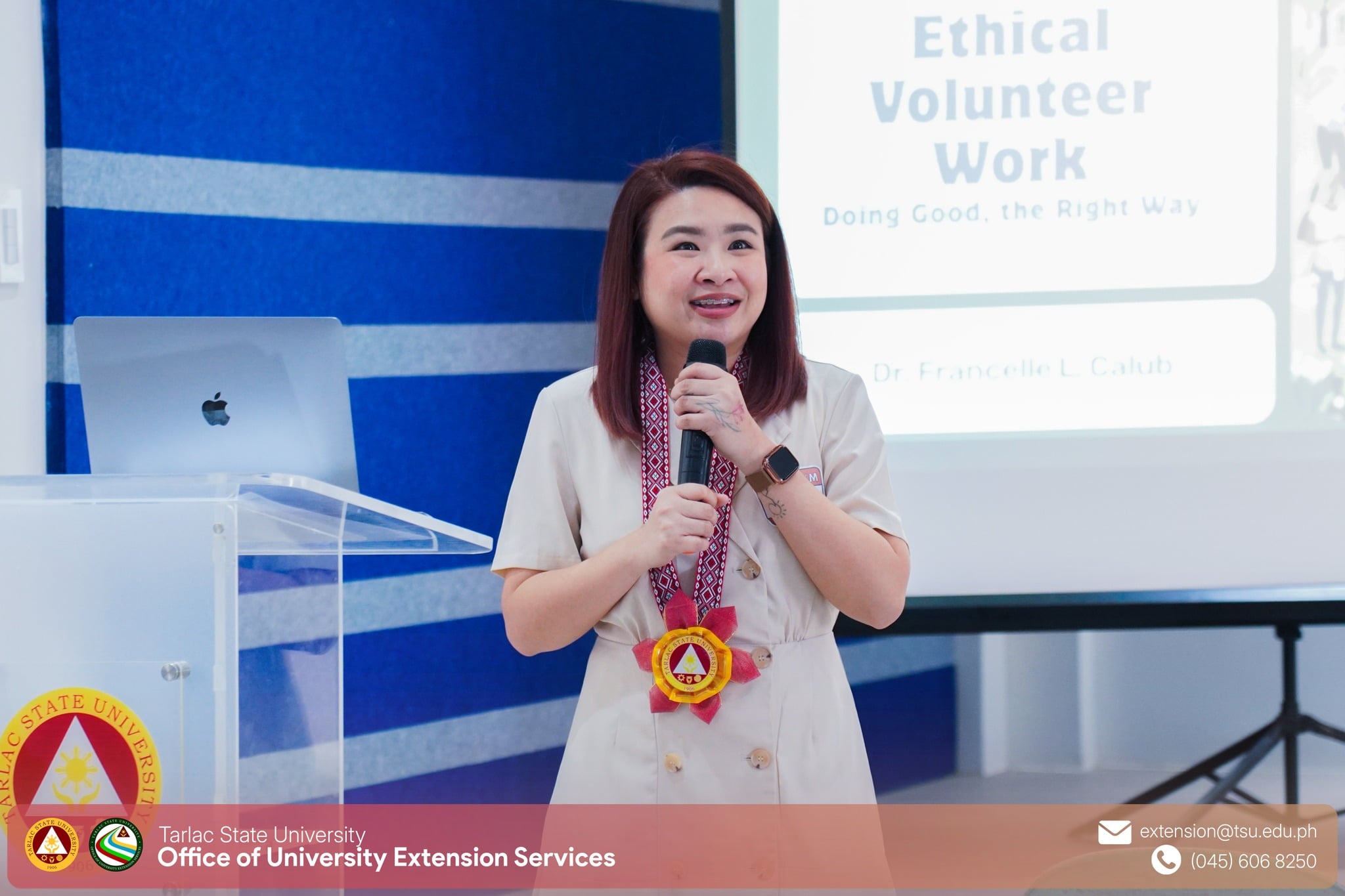
This was followed by Ethics in Volunteerism delivered by Dr. Francelle L. Calub, Head of the Volunteerism Management Department. Dr. Calub highlighted the importance of avoiding tokenism and saviorism, respecting community dignity, ensuring informed consent, and maintaining cultural sensitivity. She emphasized that ethical volunteering requires “doing good the right way”—serving with accountability, humility, and genuine partnership with communities.
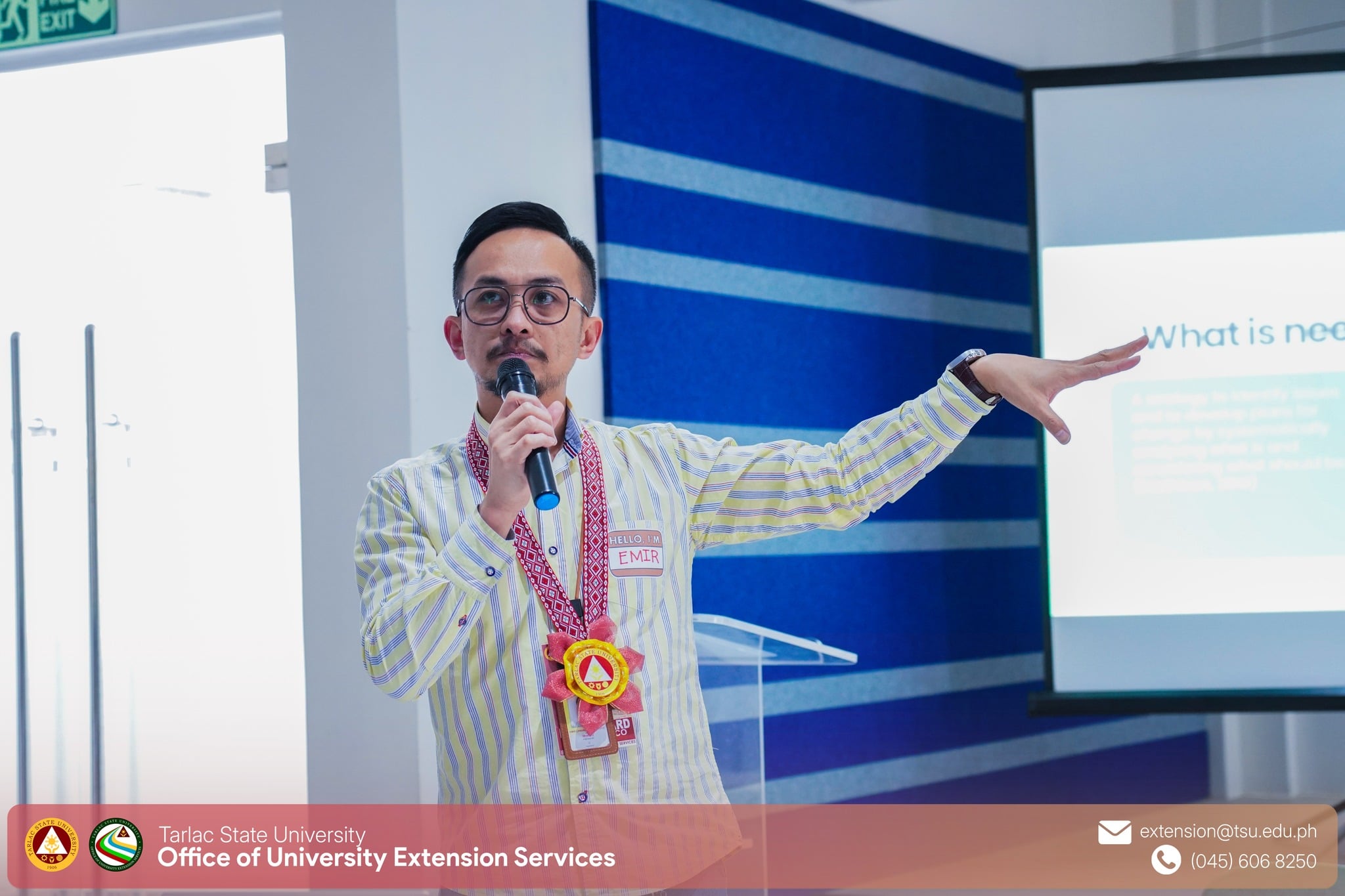
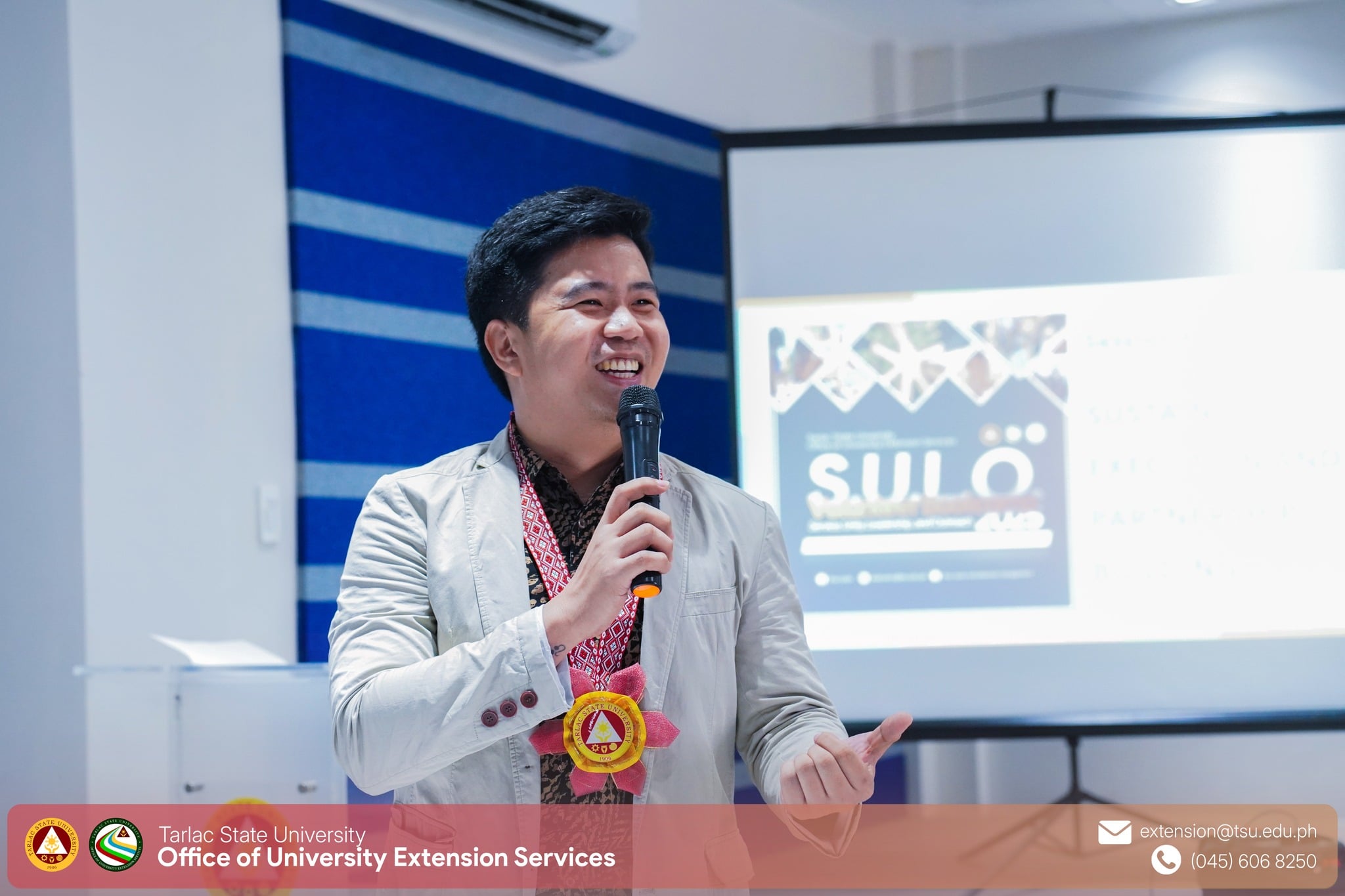
Students then participated in the Project Planning Workshop facilitated by Engr. Emir Lenard S. F. Sicangco, Director of the Office of University Extension Services, who walked them through needs assessment, SMART goal-setting, and structured planning. Day 1 concluded with Sustainable Execution and Partnership Building led by Asst. Prof. Aljon N. Lusong, Head of the Extension Services Management Department, who explained how collaboration, continuity, and proper coordination support long-term community impact.
Day 2 opened with Mindfulness and Self-Care by Mr. Vish Juvvadi, guiding participants through practices that support emotional well-being and resilience in volunteer work.
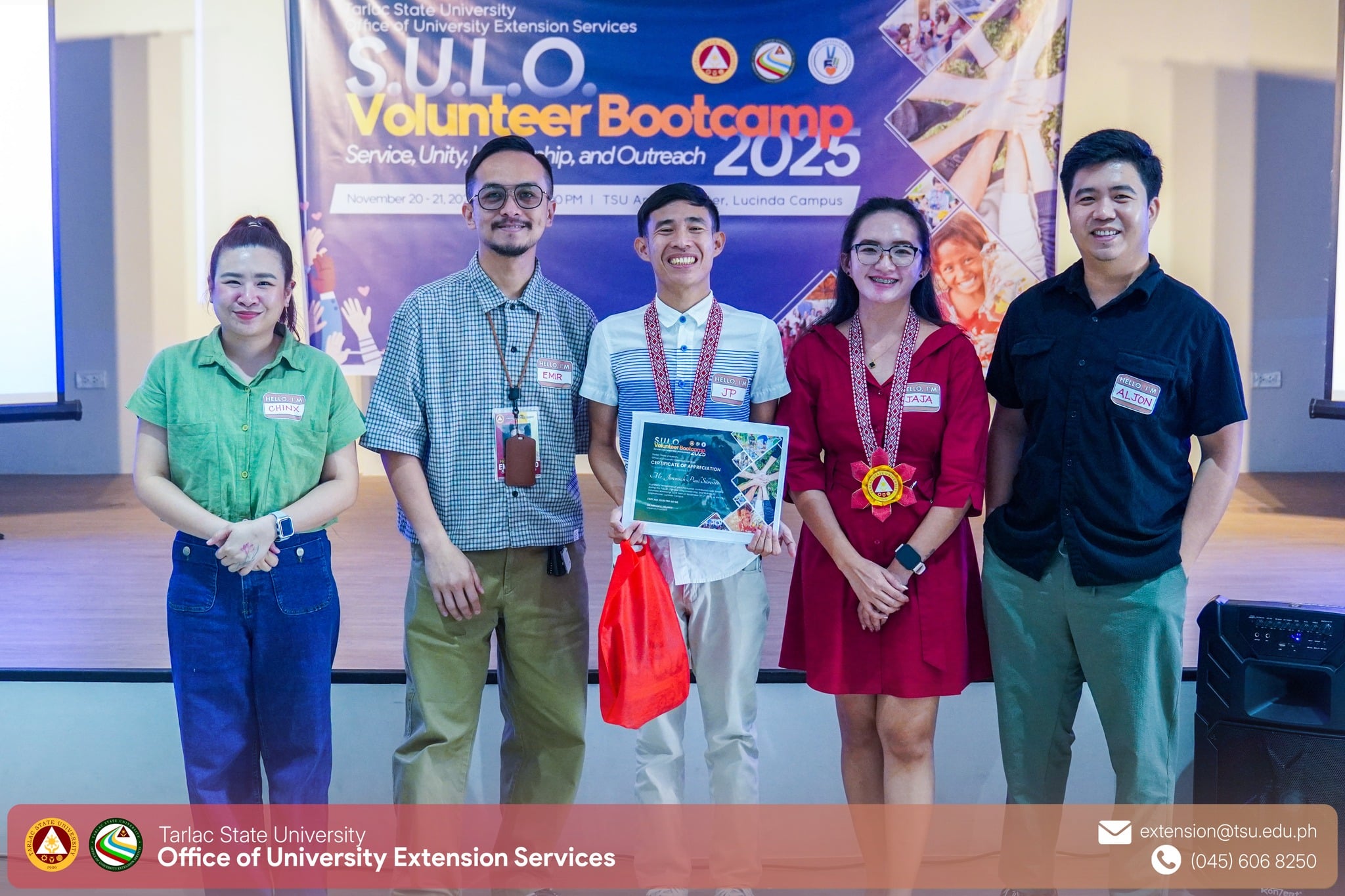
This was followed by Leadership and Teamwork presented by Mr. Jeremiah Paul Silvestre of JCI Tarlac City, who discussed principles of effective team coordination and ethical leadership within student-led initiatives.
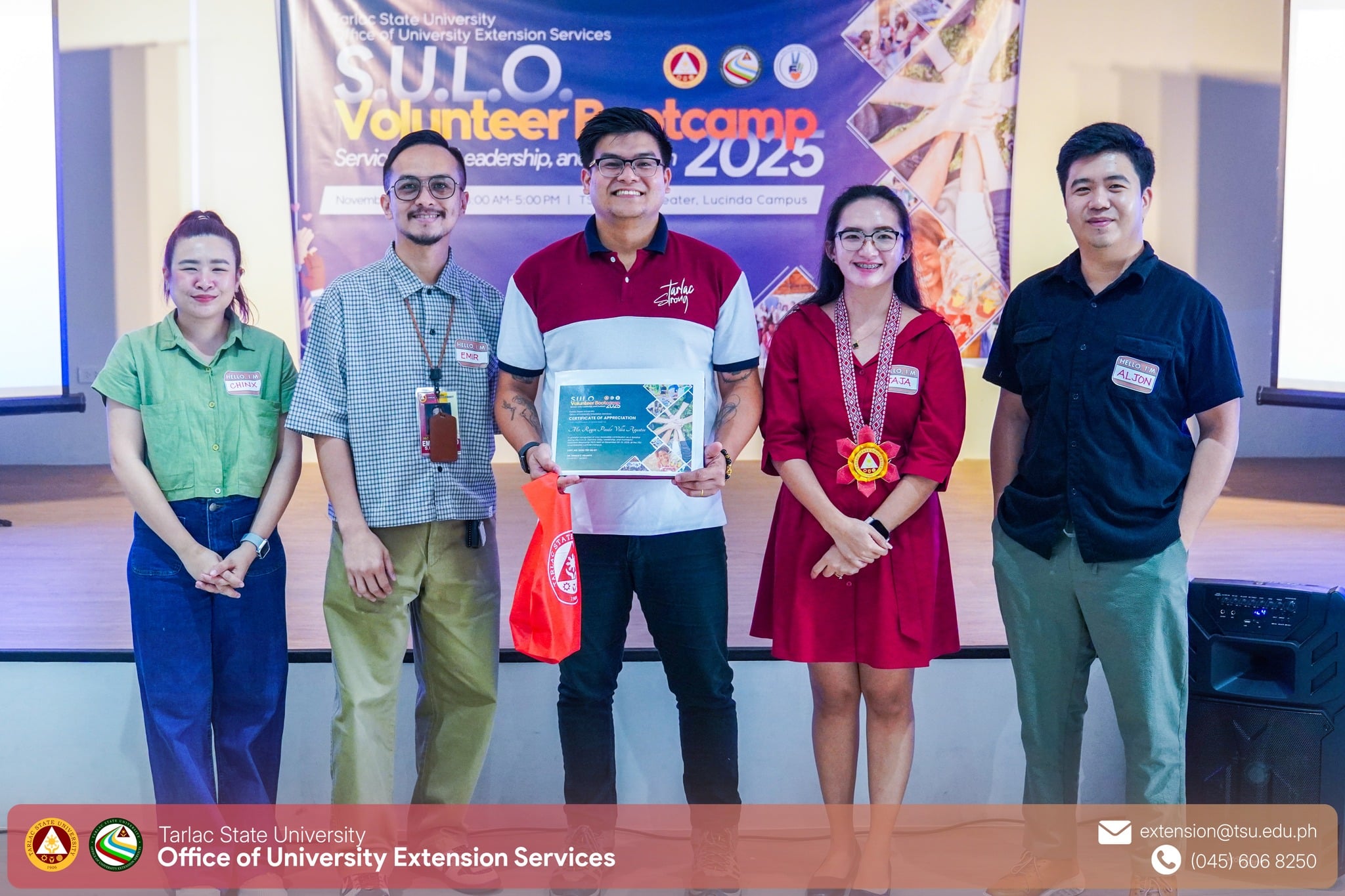
The session on Fundraising 101 was led by Mr. Regin Paulo Villa Agustin, President of JCI Victoria. He shared concrete examples of how their chapter successfully conducted fundraising activities, including project models and event-based strategies that student organizations may adapt for their own future initiatives.
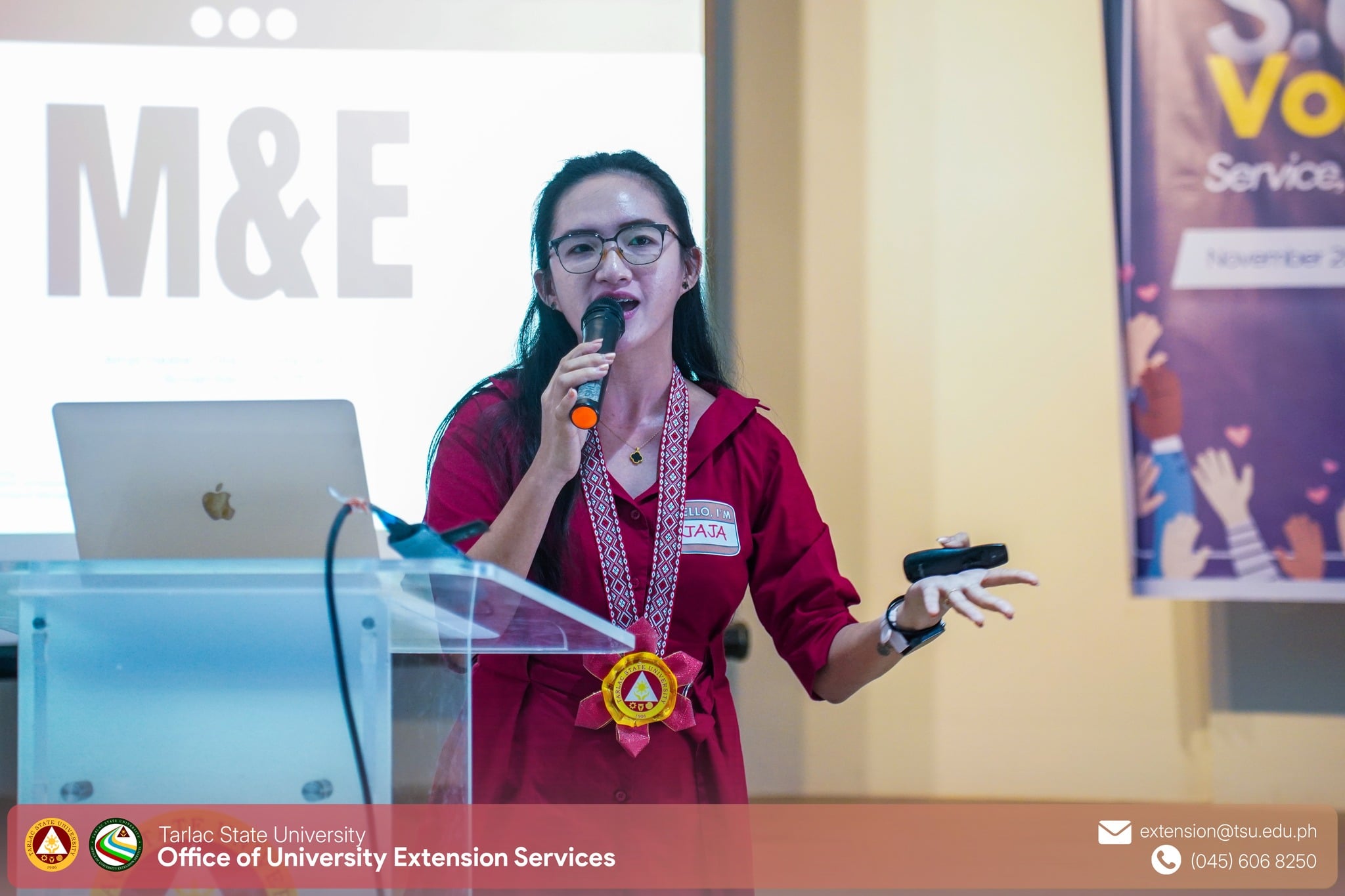
Next, Monitoring and Evaluation was delivered by Ms. Jay Ann L. Pablo, Head of the Planning and Performance Management Department, who provided frameworks for assessing outcomes, tracking progress, and ensuring alignment with organizational goals.
The bootcamp culminated in the Final Pitch and Networking Session, where student organizations presented their long-term action plans focused on sustaining community involvement, strengthening partnerships, and embedding ethical volunteer practices in their respective groups. Evaluators from JCI Victoria, JCI Tarlac City, Caritas Foundation, Vessels of Humanity, and Amor Village offered guidance to enhance these action plans and encouraged students to approach volunteerism with integrity and accountability.
Mr. Daniel C. De Guzman delivered the closing remarks as the Unit Head of the Student Organization Unit from the Office of Student Affairs and Services, emphasizing the importance of cultivating responsible leaders who uphold the values of service and community partnership.
As the bootcamp concluded, students expressed a renewed commitment to responsible, community-centered service. The SULO Volunteer Bootcamp reaffirmed TSU’s dedication to developing student leaders who serve with cultural humility, respect, and a clear understanding of volunteering the right way—never through tokenism or saviorism, but through ethical, sustained, and meaningful engagement.